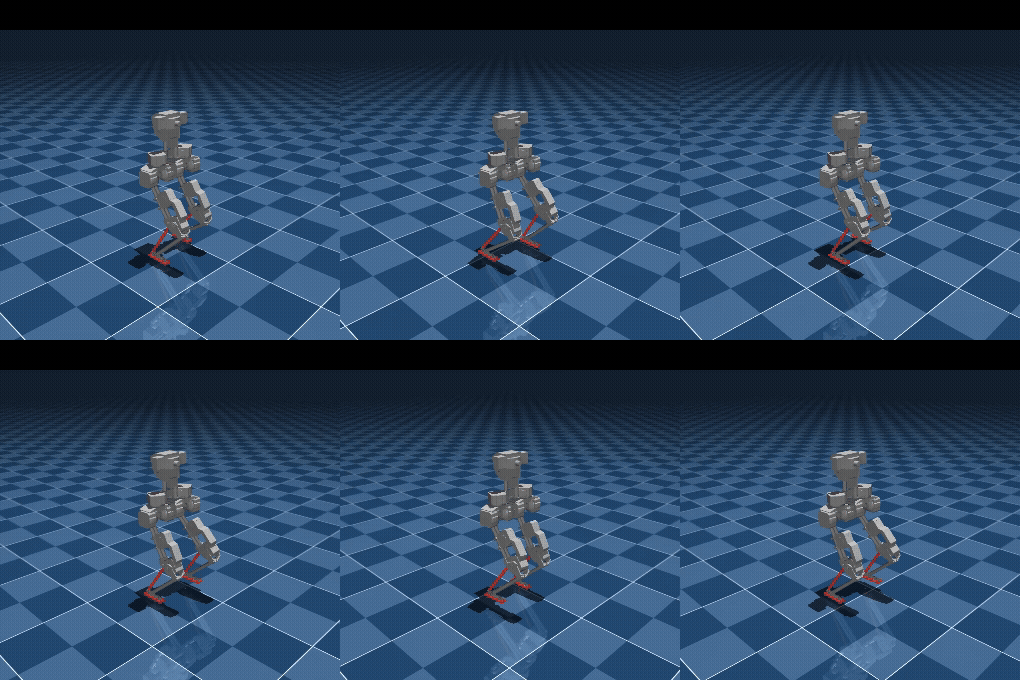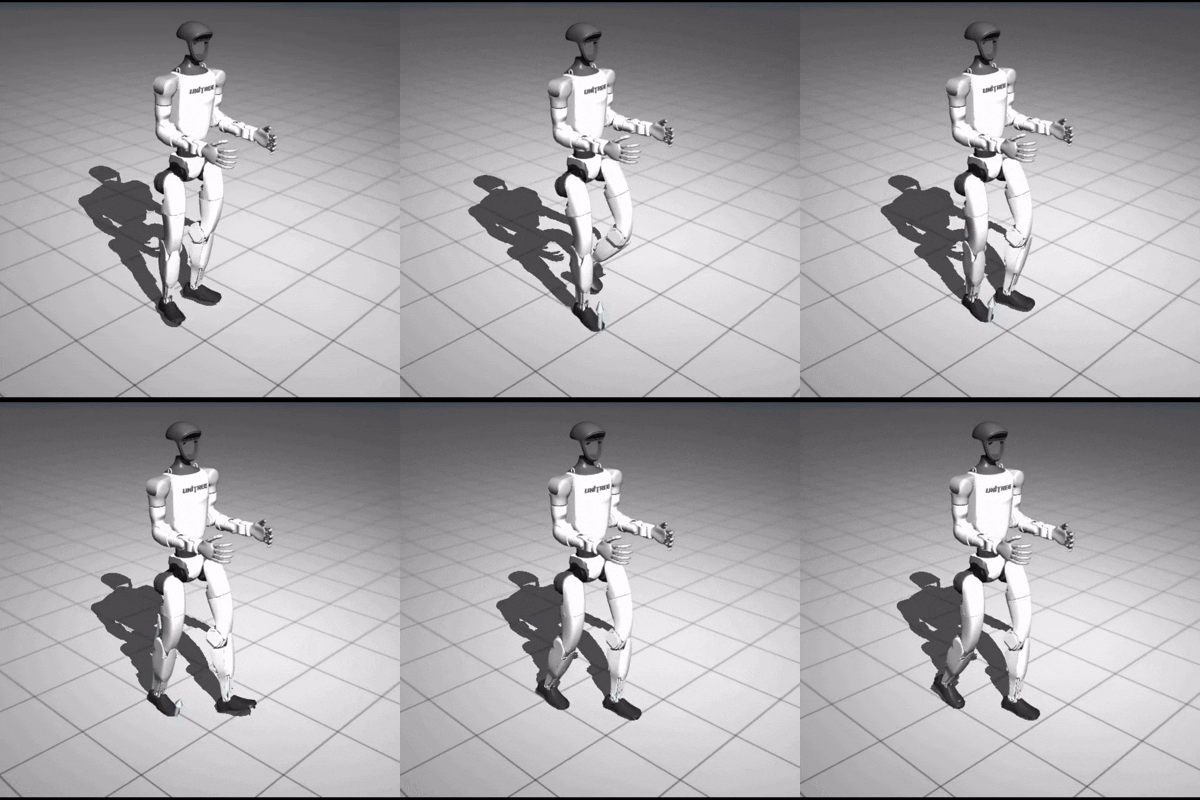
Learning-Based Control for Bipedal Locomotion
While model-based control provides theoretical guarantees for bipedal locomotion, it often requires accurate system models and can struggle with unmodeled dynamics and environmental uncertainties. Our research bridges this gap by developing hybrid approaches that combine the formal stability guarantees from control theory with the adaptive capabilities of machine learning. By integrating learning with model-based control, we develop bipedal locomotion controllers that are both theoretically sound and practically effective, capable of adapting to real-world complexities while maintaining the safety and stability guarantees necessary for assistive devices.
We currently do not have any open positions for this project.
However, if you are interested in this topic and would like to work toward a publication, feel free to reach out to Xiaoyu by email and cc Prof. Tucker, following the guidelines on the Join page.
PhD Students
- Xiaoyu Zhang (xzhang636 at gatech dot edu)
- Neil Janwani
- Varun Madabushi
Tools & Technologies
RL, Optimization, Casadi, Isaac gym/lab, Mujoco